



Question

Individual CUD Actions for an Entity

  • Oct 15, 2026 10:30 AM UTC
  • 4 replies
  • 37 views

Rajith
Sidekick (Partner)
Forum|alt.badge.img+6

Hi All,

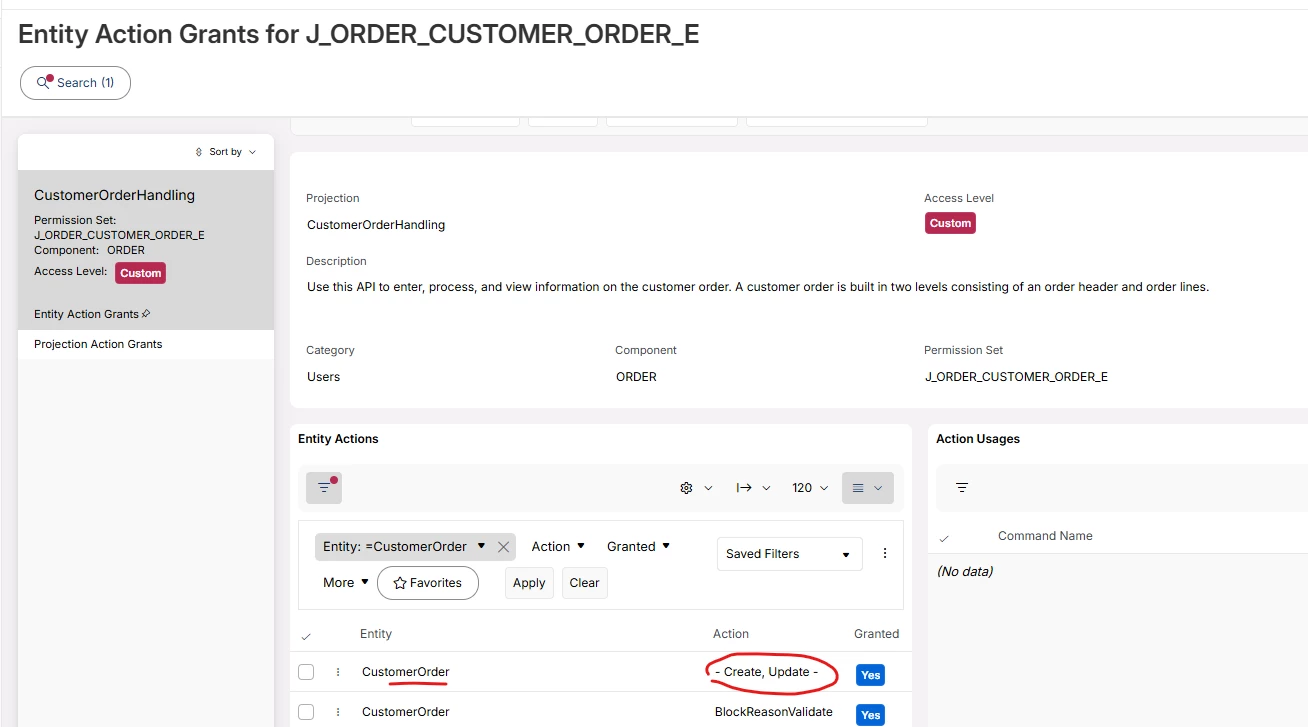
Is it still not possible to individually grant/revoke CUD actions for an entity?

Say, when we grant CustomerOrderHandling, Role A wants to Create Customer Orders and Role B wants update Customer Orders but not create.

Looks like Actions - Create, Update - are bundled together so not possible.


Any workarounds please?

Events?

Modification?

Page Designer?


TIA.
4 replies

Rajith
Sidekick (Partner)
Forum|alt.badge.img+6
  • Author
  • Sidekick (Partner)
  • Oct 15, 2026 10:39 AM UTC


PhillBronson
Hero (Customer)
Forum|alt.badge.img+13
  • Hero (Customer)
  • Oct 23, 2026 4:18 PM UTC

​@Rajith what version of IFS are you on?


Rajith
Sidekick (Partner)
Forum|alt.badge.img+6
  • Author
  • Sidekick (Partner)
  • Oct 25, 2026 10:24 PM UTC

Hey ​@PhillBronson 

Application service update: 26.1.4

/tia Rajith


Forum|alt.badge.img+12
  • Hero (Customer)
  • Nov 11, 2026 1:53 AM UTC

This is not possible, at least not through the base Framework for projections handling in permission sets.

What you want to do is of course doable but would require customizations to add specific row level security handling. There are multiple ways of doing that, such Overriding and adding checks to Check_Insert__ and Check_Update__ in PLSQL Packages which checks whether the logged in user (fnd_session_api.get_fnd_user) meets your desired criteria (such as belonging to a specific user group for instance, or having a specific System privilege).

Note that modifying the PLSQL packages would NOT remove the +/edit buttons from the client files, but would result in errors if the user tried to do something your custom business logic says they should not be able to do.

You CAN customize customize the client to make the buttons disappear on conditions but it is a bit more complex as it requires enabling the CRUD actions based on the value of a global variable for instance.

I have done that in my organization where there was a requirement for users to be able to edit Purchase Orders but not be able to create them directly.