

The bank confirms that new MTMX / ISO 20022 requirements will become effective as of 1 October 2026.
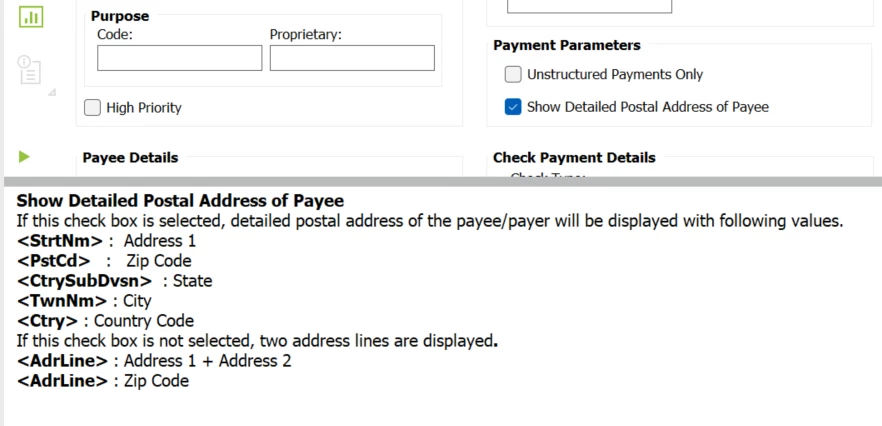
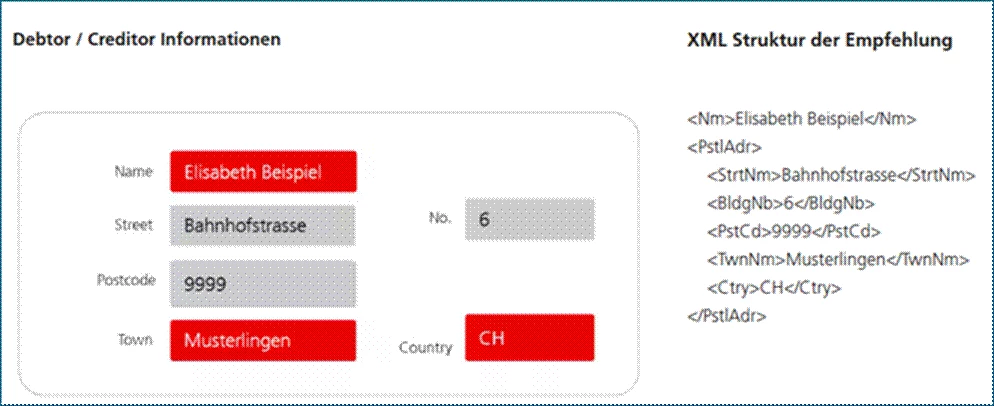
The key requirement is that postal addresses must be provided in a structured format going forward.
The unstructured address field PstlAdr/AdrLine will be ignored by the bank’s system.
The following fields will become mandatory:
- PstlAdr/TwnNm (Town Name)
- PstlAdr/Ctry (Country)
- PstlAdr/CtrySubDvsn (only mandatory for payments to Canada)
According to the bank’s feedback, this requirement is limited to the Creditor section. For both suppliers and employee payments (since this is handled in the same way for the bank).
Issue:
The default Employee Payments API file does not have detailed postal sections (in comparison to the supplier payment file) and the default transformer cannot put a detailed Postal Address in the Creditor Section. Why does the employee payment file not have creditor detailed postal address data as default in structured way (town and country)? And what is the solution for the new bank requirement?
Overview – Structured Address Requirements (ISO 20022, Nov 2026)
1. Background
- ISO 20022 payment messages (pain.003.001.x) are transitioning from unstructured (free‑text) to structured or hybrid postal addresses.
- As of 22 November 2026, fully unstructured address usage (AdrLine only) will no longer be allowed for SEPA and cross‑border payments.
2. Structured vs. Unstructured Addresses
Unstructured Address
- Uses free‑text fields (e.g. AdrLine or <Ustrd>).
- Example: “123 Main St, London”.
- Being phased out due to poor validation and compliance handling.
Structured Address
- Uses dedicated XML elements for each address component.
- Mandatory fields (even in structured formats):
- TwnNm (Town Name)
- Ctry (Country)
3. Example of Structured Address (pain.003)
<Dbtr>
<PstlAdr>
<Ctry>GB</Ctry>
<TwnNm>London</TwnNm>
<StrtNm>Main St</StrtNm>
<BldgNb>123</BldgNb>
<PstCd>EC1A 1AA</PstCd>
</PstlAdr>
</Dbtr>
- Stop using AdrLine only; rely on dedicated address elements instead.
- Town and Country must always be populated.
- Payments containing only unstructured addresses risk rejection after Nov 2026.