

Question

sinwof-Two Authorizers Required activating despite Invoice Amount below the defined threshold

  • August 17, 2026
  • 4 replies
  • 49 views

Forum|alt.badge.img+1

Hi IFS Community,

I have a question regarding the Authorization Parameters for Posting Proposal in the Supplier Invoice Workflow.

Configuration in our company:
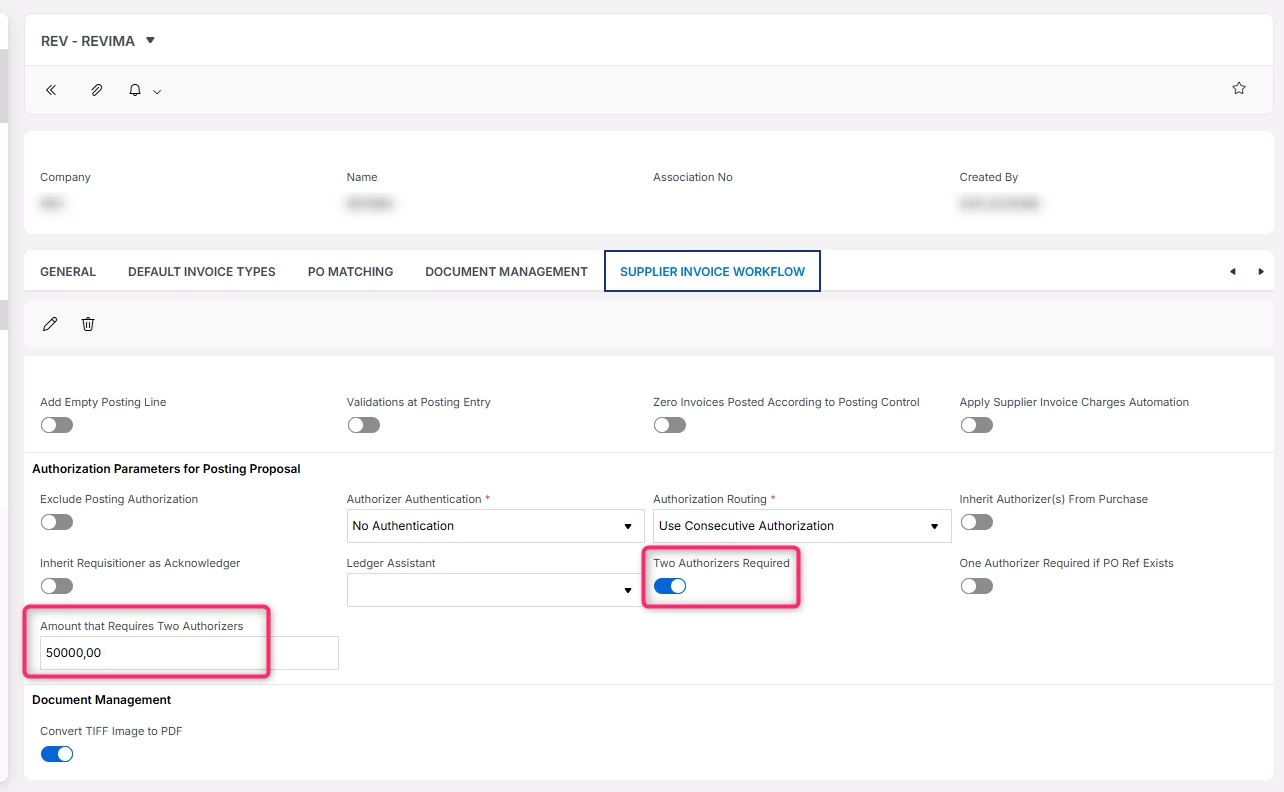
  • Authorization Routing : Use Consecutive Authorization

  • Two Authorizers Required : Enabled (Checked)

  • Amount that requires two authorizers : 50,000.00

  • EXlude Posting Authorization : Not checked 

Scenario:
I am processing a supplier invoice with the following details:

  • Invoice Amount: 12,000

  • Purchase Order Amount: 11,000

  • Difference (Variance): 1,000

The Issue:
Since the invoice amount (15,000.00) is below the defined threshold of 50,000.00, I expected the system to require only one authorizer (following the consecutive sequence). However, the system is still forcing two authorizers to approve the posting proposal sequentially (the first authorizer approves, but the workflow does not finish and continues to request a second authorizer).

Are there any other parameters missing to get the expected behavior ? 

Any insights or troubleshooting steps would be greatly appreciated. Thank you!

4 replies

Forum|alt.badge.img+20
  • Superhero (Employee)
  • August 17, 2026

Hi, 

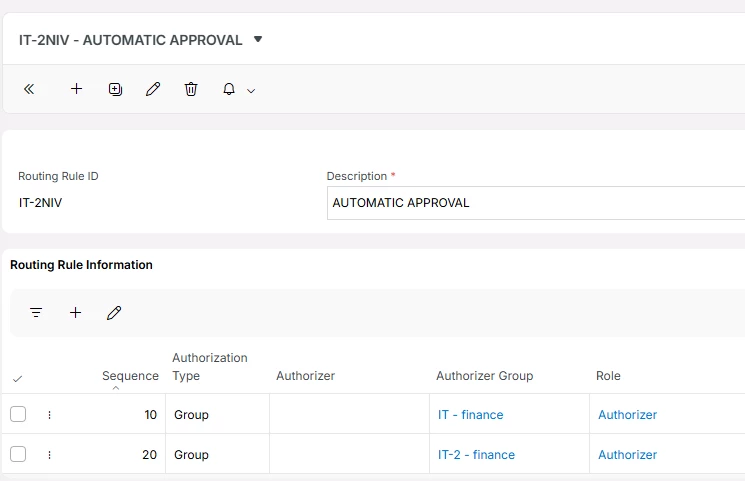
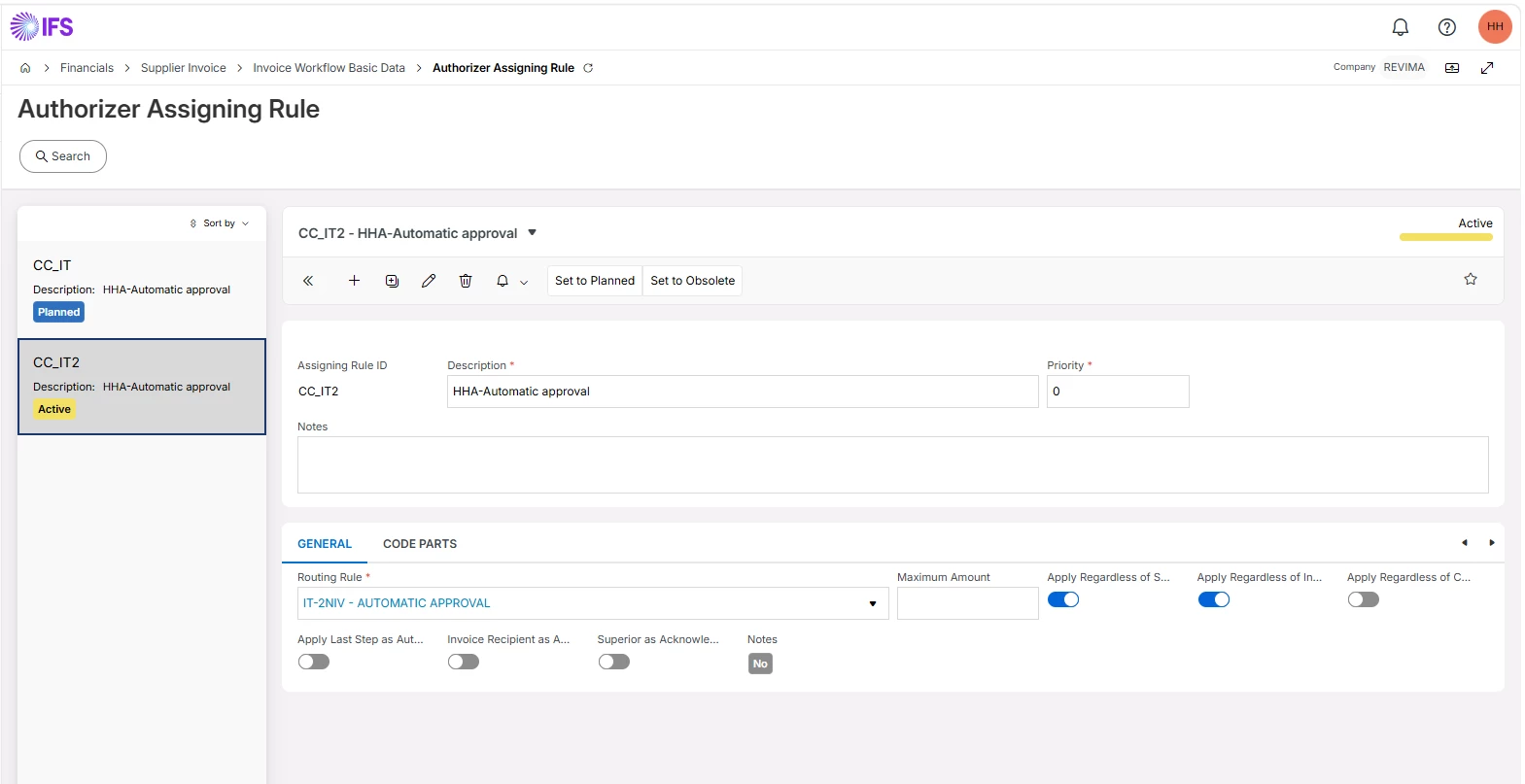
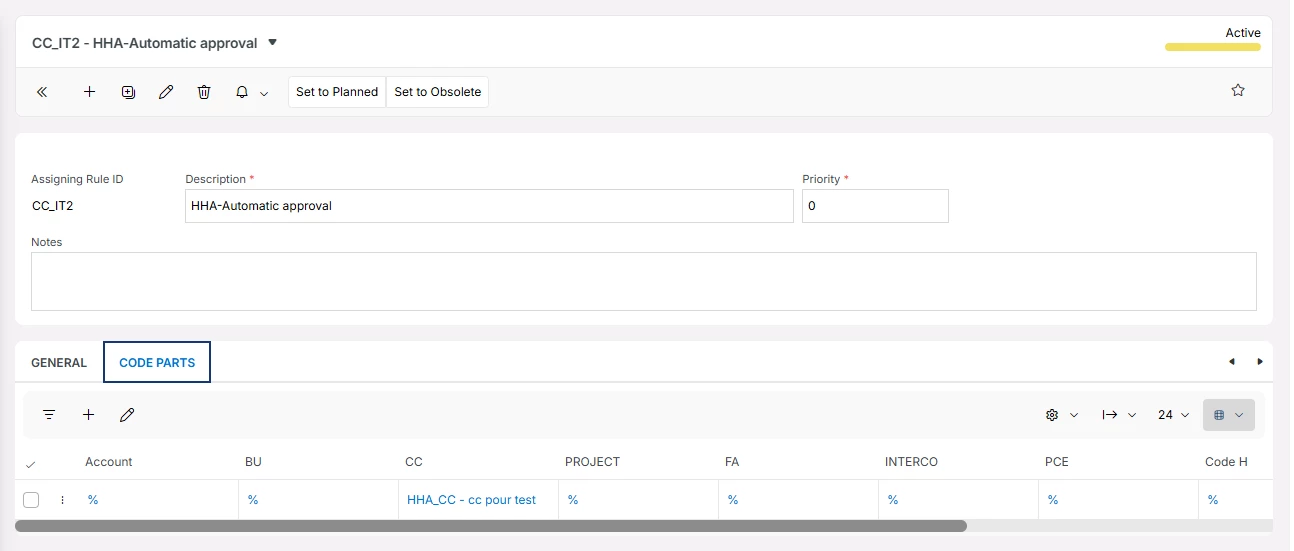
It would be important to include both authorization routing rule, and the assigning rule. 

In short, how many steps are in the assigning rule that was used via that authorization routing rule? I suspect you have two steps for that given rule. 

Assuming the authorization only had 1 authorizer and the invoice (your example was over 50K) you would receive an error message that the invoice requires 2 authorizers.  

I see no evidence that if the authorization rules includes two authorizers that only one is needed. IFS acts upon the authorization rules, and if the rule dictates two authorizers, you need the two authorizers to act, even if the invoice (your example) was less than 50K. 

In short, IFS follows the authorization rules and steps you defined in the rules.   Then “IF” an invoice was over 50K you then need two authorizers even if only one authorizer was assigned due to the rules.  

Best regards, 

Thomas


Forum|alt.badge.img+1
  • Author
  • Do Gooder (Partner)
  • August 18, 2026

Hi, 

It would be important to include both authorization routing rule, and the assigning rule. 

In short, how many steps are in the assigning rule that was used via that authorization routing rule? I suspect you have two steps for that given rule. 

Assuming the authorization only had 1 authorizer and the invoice (your example was over 50K) you would receive an error message that the invoice requires 2 authorizers.  

I see no evidence that if the authorization rules includes two authorizers that only one is needed. IFS acts upon the authorization rules, and if the rule dictates two authorizers, you need the two authorizers to act, even if the invoice (your example) was less than 50K. 

In short, IFS follows the authorization rules and steps you defined in the rules.   Then “IF” an invoice was over 50K you then need two authorizers even if only one authorizer was assigned due to the rules.  

Best regards, 

Thomas


thank you for your reply. 

Indeed, in my routing rule, I have two authorization levels.


If I fully understand, I only need to define the first step in my routine rule. This means that the second authorizer will not be filled in automatically and will require manual intervention.

Is there a best practice I could follow to ensure that both authorizers are triggered automatically, without any manual intervention?


Thank you for your help. 


Forum|alt.badge.img+20
  • Superhero (Employee)
  • August 18, 2026

Hi

Best practice is to define the authorization rules based on the authorization needs. Then plan what rules are tested in what order based on the priority of a given rule.   If for a given posting & amount you only need 1 authorizer, then set up one step.  Assume the value of the posting increases to X and that is a level that needs two steps, then you need a new auth rules with higher values. The higher priority (lower number) given the lower value rule needs to be triggered first, then the second rule higher value is triggered. 

In short, define the rules to replicate the true authorization needs.  That’s best practice. Rule 1 is triggered when value is less than X (where you only need 1 step), and use another rule when value requires two steps.  Because rules are tested based on priority, rule 1 needs to be tested before rule 2.  IFS will test if rule one applies, then because the value is greater than X, rule 2 will be tested and applied. You then get 1 step for the lower value invoice, then the higher value invoice you get two steps assigned.   

If you accidentally set the higher value rule as priority 10 (where the lower value rule is priority 50) the higher value rule is tested first, and all related invoices would get that rule (two steps).  For that reason the lower value rule must be tested before the higher value rule, so lower value invoices, get one step, the high value invoice gets two steps. 


The check box, you note in the first comment, is more of a safety net then a rules driver / rules manipulator.   It just indicates as a global rule if the postings are greater than 50K, you need two signatures. 

Best regards, 

Thomas


Forum|alt.badge.img+1
  • Author
  • Do Gooder (Partner)
  • August 26, 2026

thank you for answer, it was helpful.