
Question

Using ETM to capture requester responses on the active CR workflow task

  • February 9, 2026
  • 4 replies
  • 39 views

Hello everyone,

I would appreciate some guidance on an assyst workflow / ETM use case.

In our Change Request (CR) workflow, the assigned user can take an action called “Add Info”. When they select this action, they:

  • add a comment, and

  • attach a file (if needed)

This triggers a notification to the requester (email) to provide the missing information.

The requester then goes to assystNET and replies by:

  • adding the requested details as a comment

  • uploading an attachment (e.g. the completed form)

However, because the requester cannot see the CR workflow tasks in assystNET, their reply is captured on the parent CR event, not on the active workflow task that is actually waiting for their response.

What I am trying to achieve is:

  • When the requester adds a comment/attachment on the parent CR in response to the “Add Info” request,

  • use ETM to identify the currently active child task for that CR (the “awaiting additional info” task),

  • and then copy/replicate the requester’s comment and attachments to that active task (so the workflow progresses correctly and the audit trail sits on the task).

My questions are:

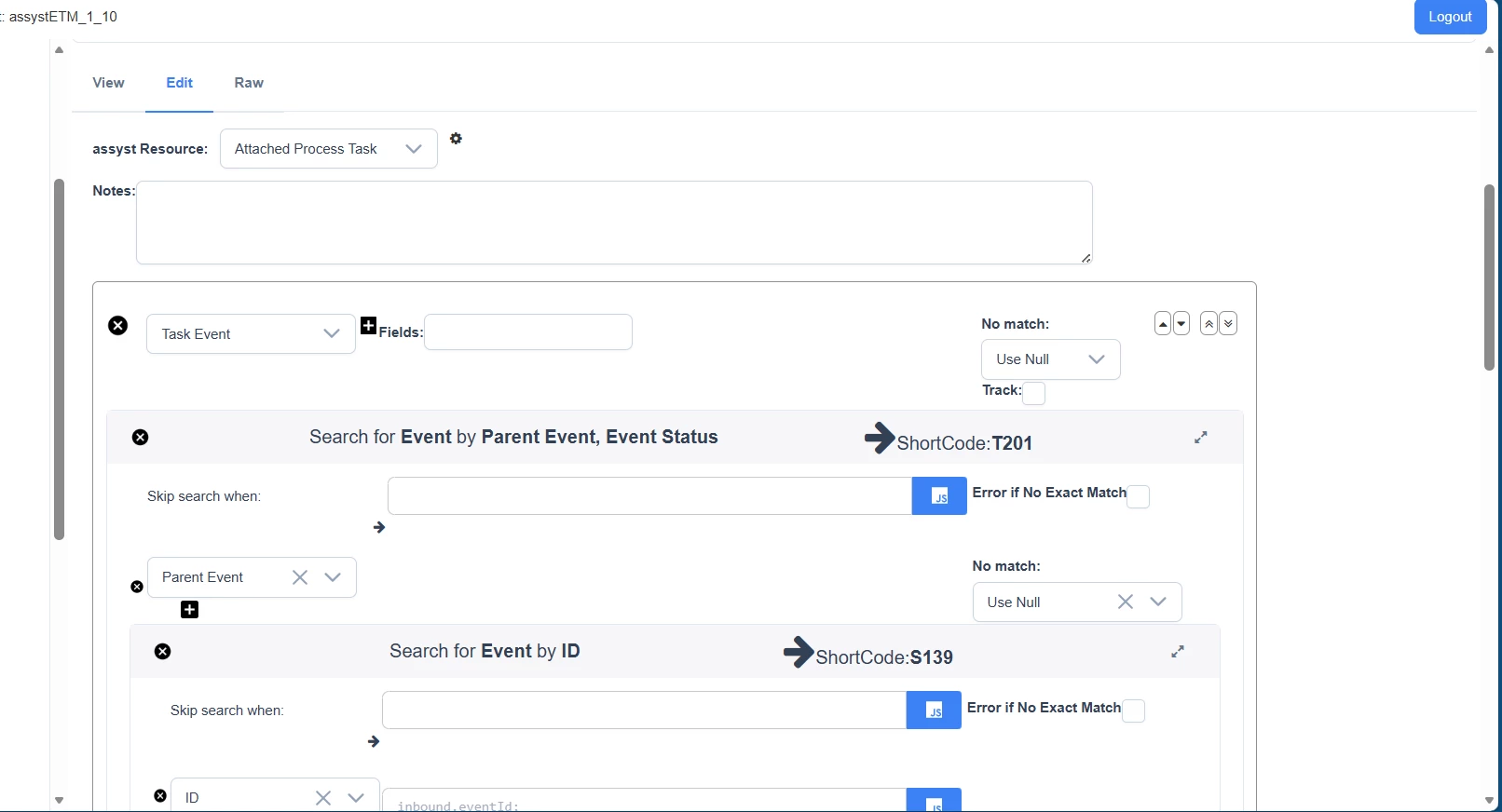
  1. Within ETM, what is the recommended way to reliably identify the active workflow task for a given parent CR?

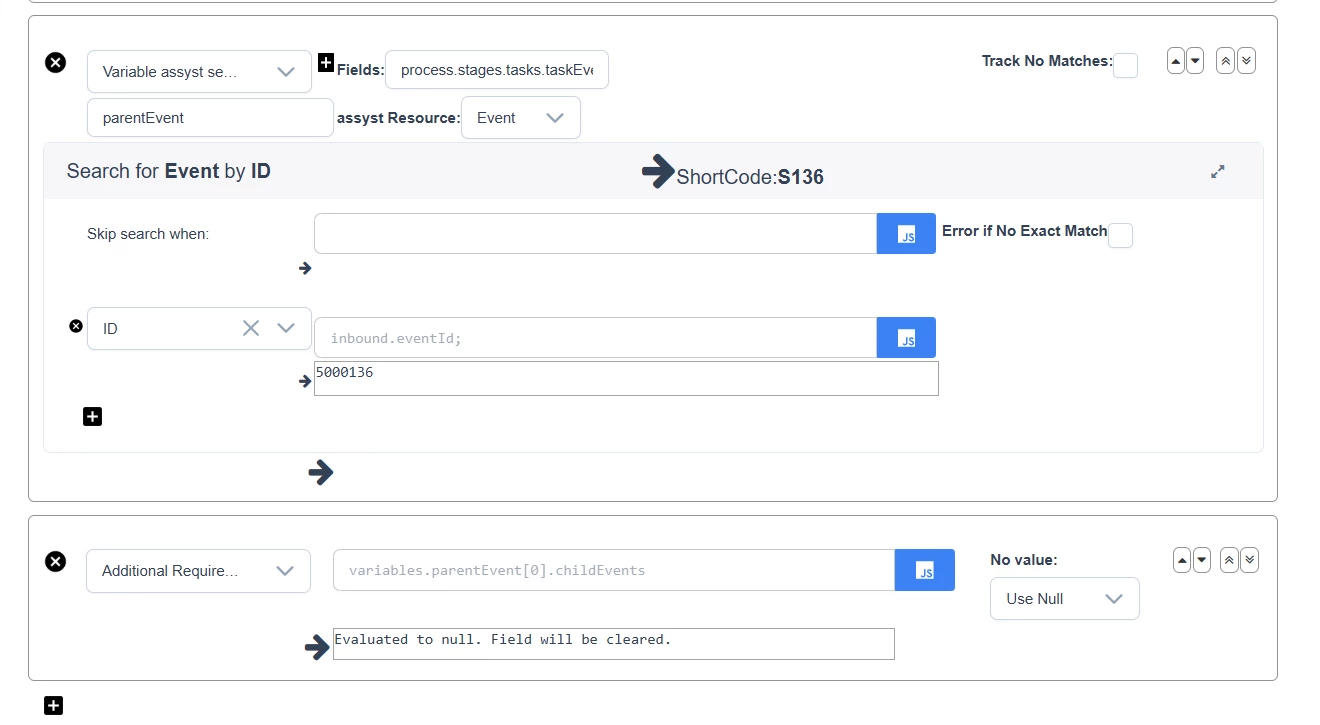
    • Variable assyst Search retrieving process.stages.tasks.taskEvent?

    • Or another approach (e.g. Destination message expansion / minimising REST calls)?

Any best practice, example configuration, or confirmation of feasibility would be very helpful.

Thank you in advance.


4 replies

Forum|alt.badge.img+5
  • Hero (Employee)
  • February 11, 2026

I have few questions on this to get a better idea of the current setup

1.How do you trigger the ETM channel when the user added the missing info as a comment on the parent event ?


2.Are there more than one task on the stage ?

3.What is the assyst version that you are using ?


4.What is the assyst resource you selected for the datamapper in your screenshot ? 

Anyway, if you want to copy the attachment from the parent event to the task then you will need http request mapper as well.

If you are using destination to trigger the ETM channel better to use “message filtering and expansion”. 
I’ll do few test to check and confirm whether we can get the task id using assyst expression for destination “message filtering and expansion”.


  • Author
  • February 11, 2026

I have few questions on this to get a better idea of the current setup

1.How do you trigger the ETM channel when the user added the missing info as a comment on the parent event ?


2.Are there more than one task on the stage ?

3.What is the assyst version that you are using ?


4.What is the assyst resource you selected for the datamapper in your screenshot ? 

Anyway, if you want to copy the attachment from the parent event to the task then you will need http request mapper as well.

If you are using destination to trigger the ETM channel better to use “message filtering and expansion”. 
I’ll do few test to check and confirm whether we can get the task id using assyst expression for destination “message filtering and expansion”.

Hi Rajana,

Thanks for the questions — please find the details of our current setup below:

  1. How do you trigger the ETM channel when the user added the missing info as a comment on the parent event?
    We trigger the ETM channel on an Event update on the parent CR (Event resource). Specifically, when the assigned user uses the “Add Info” action, we send the requester a notification to respond via assystNET. In assystNET we have a dedicated action with a unique short code (mapped for this scenario), and that action/update is what we use to reliably trigger the ETM channel when the requester submits the missing info (comment and/or attachment).

  2. Are there more than one task on the stage?
    Yes, the workflow contains multiple stages, and potentially multiple tasks across the workflow. However, the “Add Info / awaiting additional info” task is always associated with the currently active stage at the time of the request. Our requirement is to identify the single active task (awaiting requester response) under the active stage for that parent CR, and replicate the requester response to that task.

  3. What is the assyst version that you are using?
    assyst 25R2.

  4. What is the assyst resource you selected for the datamapper?
    Event. The inbound payload represents the parent CR update coming from assystNET (requester response). From this parent event, we need to resolve the active child workflow task event and copy the requester’s comment/attachments onto it.

Attachment handling (important):
The attachment replication is a key requirement for us. We need to copy the attachment(s) from the parent CR to the active child task (task event), because the workflow progress and audit trail must sit on the task. We expect this will require HTTP Request Mapper calls (retrieve/download from parent event, then upload/attach to the child task event).

Regarding using Destination “message filtering and expansion”:
We prefer using message filtering/expansion to minimize REST calls if it can reliably give us the active task/task event id via expression. Please share your test outcome on whether we can expand from the parent event to the active stage taskEvent (or equivalent) and extract the task event id reliably.

Kind regards,
Manaf


Forum|alt.badge.img+5
  • Hero (Employee)
  • March 15, 2026

Apologies for the delay in responding to this 

I checked and tried to get the task id from message filtering expansion but failed. I believe this is due to expressions not supporting for arrays. In a process stage value is an array because there can be multiple stages in a process and inside the process task id going to be array again because multiple tasks can be created inside one stage. 

Hence, you will have to use ETM to find the active task by using variable asssyt search. 
You can search in linkedEventGroup resource with the parenevent id, then pick the linked event group id. Search again in the linked event group with the group id. It will give you all the tasks attached to that parent event. 
You can use an array to pick up the active task.

You will need http (assyst) mapper and a xml parser to get the attachment. 

Let me know if you need a sample channel for this.


Hi Rajana

Thank you for your reply and for taking the time to explain the limitation around message filtering expansion and arrays in the process stage/task structure.

Your explanation was very helpful, especially the part about using ETM with assyst search on the linkedEventGroup resource to retrieve the related tasks and then using an array to identify the active one.

In the end, I managed to find another way to return the active child task, and I have already built the data mapper for it.

Really appreciate your support and the detailed guidance.

Best regards,