


A. What is your idea?
1) Classification
Choose ONE: keep the applicable option and delete the rest.
- Opportunity for improvement
2) Brief description
What happened, what is missing, or what could be better? Focus on the problem or opportunity (not the solution).
Write here:
Business Need
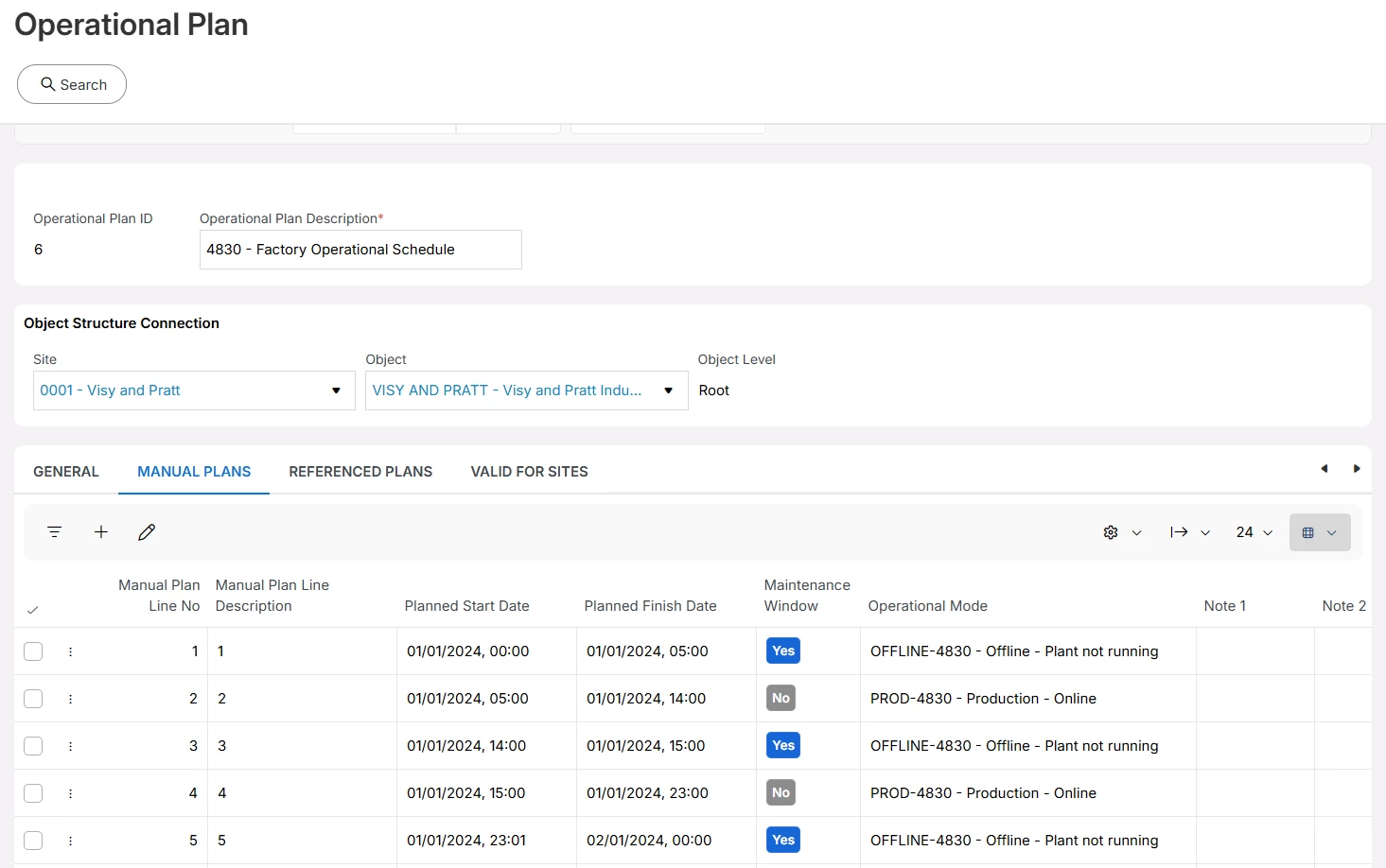
Currently, Operational Plans in IFS Cloud can only be defined at the root (top-most) level of an Equipment Object Structure. While this approach may be suitable for simple asset hierarchies, it creates significant administrative and maintenance challenges for organizations with complex, multi-level structures.
In our asset hierarchy, individual Sites are grouped under Divisions, and Divisions are grouped under Business Units. As a result, managing site-specific operational schedules using the existing Operational Plan functionality has become increasingly difficult and inefficient.
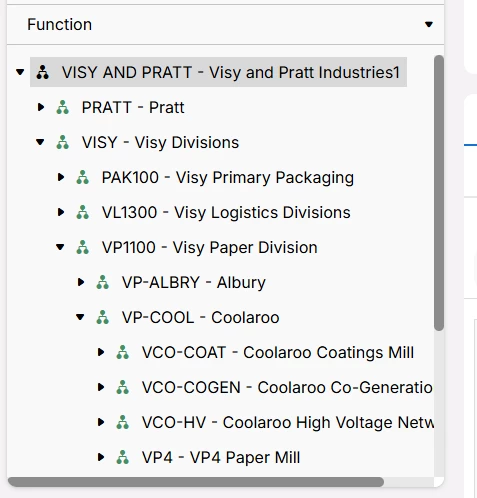
To overcome this limitation, we currently rely on Operational Modes to differentiate operational plans for individual sites. However, this approach is cumbersome, difficult to maintain, and does not provide a robust long-term solution.
Current Challenges
- Operational Plans can only be maintained at the root object level.
- Site-level operational requirements cannot be easily managed within a hierarchical structure.
- Significant administrative effort is required to maintain multiple Operational Modes though they are set up to extend automatically
- Changes to operational schedules require extensive manual maintenance.
- Limited scalability for organizations with large and complex equipment hierarchies.
- Increased risk of configuration inconsistencies and data quality issues.
Proposed Enhancement
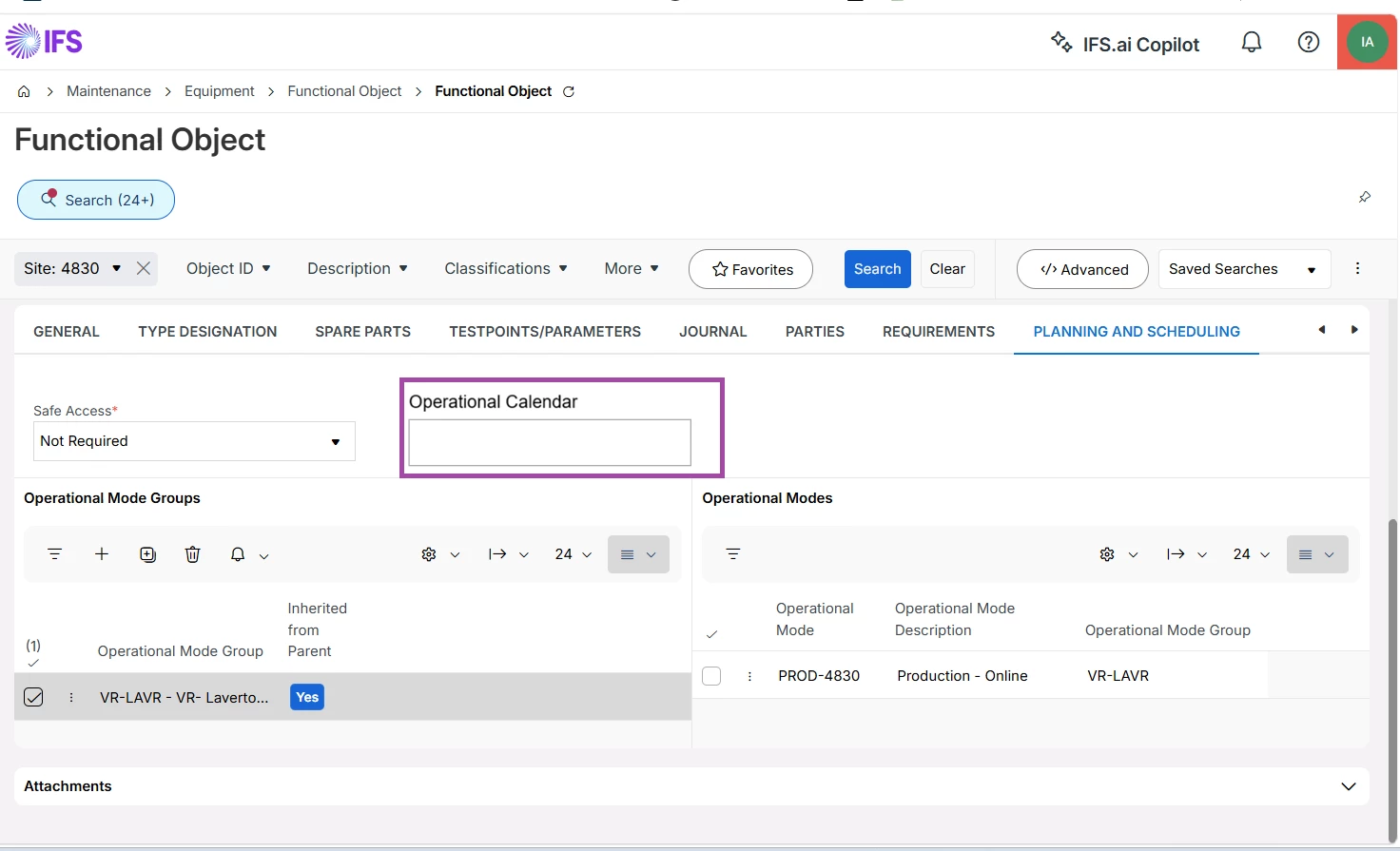
1. Introduce Operational Calendars
Allow Operational Calendars to be assigned directly to any Object ID within the Equipment Object Structure, similar to the way Resource Calendars are managed today.
This would provide greater flexibility and align operational scheduling capabilities with real-world asset management structures.
2. Hierarchical Calendar Inheritance
When an Operational Calendar is assigned to a parent object:
- The calendar should be capable of being propagated to all child objects.
- The inheritance mechanism should function similarly to the existing Operational Mode propagation functionality.
- Organizations should have the option to selectively include or exclude child objects.
3. Calendar Override and Validation Logic
When pushing an Operational Calendar to child objects:
- The system should identify child objects that already have an assigned Operational Calendar.
- Users should be presented with options to:
- Replace existing calendars
- Retain existing calendars
- Review conflicts before applying changes
4. Operational Break Management
Introduce Operational Break functionality similar to Maintenance Resource Breaks.
Operational Breaks should:
- Be definable against any object in the hierarchy.
- Be inherited by child objects where applicable.
- Support temporary shutdown periods, outages, seasonal closures, production stoppages, and similar operating constraints.
- Be managed independently from the base Operational Calendar.
5. Effective-Dated Changes
To support operational flexibility, calendars and operational breaks should allow:
- Effective start and end dates
- Scheduled future changes
B. Context and scope
1) Who is affected?
Choose ONE or MORE: keep the applicable options and delete the rest.
- Internal users
2) Frequency
Choose ONE: keep the applicable option and delete the rest.
- Frequently
C. Value and impact
1) What is the business outcome?
Choose ONE or MORE: keep the applicable options and delete the rest.
- Improves productivity or efficiency
- Reduces cost or manual effort
- Enhances user experience
2) Impact scale
Choose ONE: keep the applicable option and delete the rest.
- 5 — Enterprise-wide
3) Workaround
If there is a workaround, describe it briefly. Otherwise write “No workaround”.
Write here:
Current cumbersome Operational plan process
D. Evidence and examples
Attach screenshots, documents, or examples using the buttons below. If helpful, summarize key supporting evidence here.
Write here:
E. Additional details
1) Enter support ticket ID reference (If applicable)
Write here:
G2324503 - Issue with creating Operational Plans
2) Would you like to participate in validation or early testing?
Answer “Yes/No”.
Write here:
Yes